
How to Assess Basic Infrastructure Facilities in a Residential Plot Layout in Vengal?
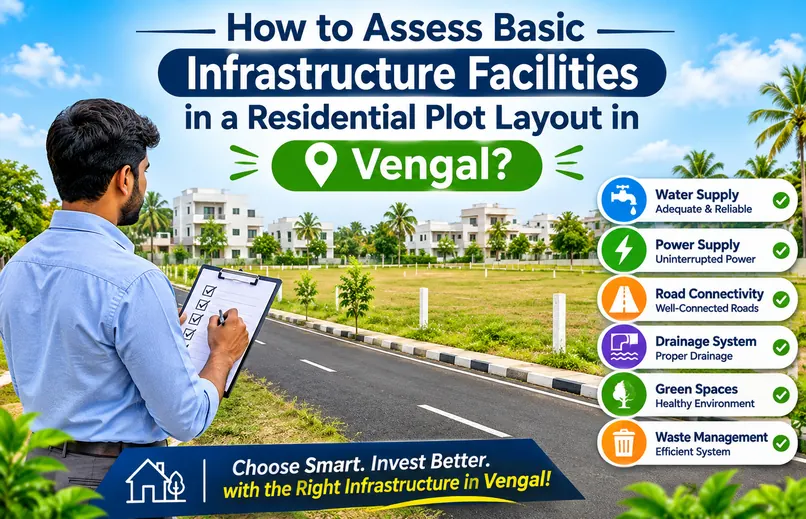
Buying a residential plot is an important decision, especially for families planning to construct a home or invest in land for future use. While location, plot size and price are common factors buyers compare, the infrastructure available within a plotted development is equally important.
A residential layout may appear attractive during an initial site visit, but buyers should examine its internal roads, electricity provisions, water arrangements, drainage facilities and other essential infrastructure before booking.
Vengal is one of the locations where buyers can explore different residential plot options around the Chennai region. If you are considering purchasing land here, understanding how to assess basic infrastructure facilities can help you make a more informed decision.
Explore properties for sale in Vengal on ChennaiLand and compare available residential plot options based on your requirements.
1. Examine the Internal Road Network
Internal roads are among the first infrastructure features buyers should inspect when visiting a residential layout. Proper road access supports everyday movement, construction activities and emergency vehicle access.
During your site visit, consider the following:
-
Check the width of the internal roads.
-
Observe whether roads are properly formed and accessible.
-
Look for clearly defined road boundaries.
-
Check whether roads connect conveniently to the main access road.
-
Examine turning space for cars and other vehicles.
-
Verify whether the roads shown in the approved layout plan match the actual site.
Do not rely only on the road width mentioned in promotional materials. Compare the actual measurements with the approved layout documents and applicable planning requirements.
2. Verify Electricity Infrastructure
Electricity availability is essential for residential construction and everyday living. Buyers should understand whether the layout has the necessary electricity infrastructure or whether connections still need to be arranged.
Check these aspects before booking:
-
Availability of electricity poles and distribution infrastructure.
-
Provision for transformer installation, wherever required.
-
Accessibility of individual electricity connections.
-
Availability of streetlight provisions.
-
Whether electricity infrastructure is already installed or planned for future development.
Ask the developer about the process and estimated timeline for obtaining individual service connections. Also confirm any additional charges that may apply.
3. Understand the Water Supply Arrangements
Water availability should be evaluated before purchasing a residential plot. The actual water source and supply arrangements may differ between layouts.
Consider checking:
-
Whether a public water connection is available.
-
Whether the layout depends on groundwater or borewells.
-
Whether common water storage facilities are provided.
-
Whether individual water connections are permitted.
-
Whether there are any known water availability concerns in the surrounding area.
If the developer mentions a common water facility, ask for details about its capacity, maintenance responsibility and operational status.
Buyers should also understand that groundwater availability can vary depending on local conditions and seasonal changes.
4. Inspect the Stormwater Drainage System
Drainage is an important consideration when evaluating residential land, particularly during the monsoon season.
Poor drainage arrangements can lead to water stagnation, difficult access and potential problems during construction.
During your inspection, look for:
-
Visible stormwater drains along internal roads.
-
Proper drainage channels and outlets.
-
The direction of natural rainwater flow.
-
The elevation of individual plots compared with surrounding roads.
-
Signs of water stagnation or soil erosion.
-
Connectivity between internal drainage facilities and the approved external drainage system.
Visit the site after rainfall, if possible. This can help you understand how rainwater moves through the layout and whether any areas experience prolonged waterlogging.
5. Check Streetlights and Common Infrastructure
Streetlights and common facilities contribute to the usability of a residential layout, particularly for people who plan to live there permanently.
Check whether the development provides:
-
Streetlight poles along internal roads.
-
Clearly marked street names or road identification.
-
Properly maintained common areas.
-
Waste collection arrangements, where provided.
-
Safe pedestrian access.
-
Clearly defined public or common-use spaces shown in the approved plan.
Not every plotted development provides the same facilities. Therefore, buyers should distinguish between infrastructure that already exists and amenities that are only proposed.
6. Evaluate Access to the Layout
A residential layout should have convenient and legally documented access to public roads.
Even when internal infrastructure is properly developed, difficult access to the main road can affect daily travel and construction logistics.
Before purchasing, evaluate:
-
The condition of the approach road.
-
The distance to the nearest main road.
-
Whether the access road is legally documented.
-
Whether the road is usable throughout the year.
-
Accessibility for construction vehicles and emergency services.
-
The availability of alternative access routes, if applicable.
For buyers planning to commute regularly, checking the actual travel distance to workplaces, schools, hospitals and essential services is also useful.
7. Compare Actual Site Development with the Approved Layout Plan
One of the most important checks is comparing the physical development of the layout with its approved plan.
A brochure or marketing illustration may show proposed roads, open spaces and infrastructure facilities. However, buyers should verify what has actually been developed.
Compare the approved layout plan with the site to check:
-
Plot numbers and dimensions.
-
Internal road alignments.
-
Road widths and access points.
-
Open spaces and reserved areas.
-
Drainage provisions.
-
Utility-related spaces.
-
Boundaries and common-use areas.
If there are differences between the approved plan and the actual site, seek clarification and professional verification before proceeding.
8. Understand the Responsibility for Infrastructure Maintenance
Infrastructure development does not end with installation. Proper maintenance is necessary to keep roads, drainage systems and common facilities usable.
Before booking, ask the developer:
-
Who is responsible for maintaining internal roads?
-
Who will manage common electricity facilities?
-
How will drainage systems be maintained?
-
Are there any common maintenance charges?
-
Will the layout be handed over to a local authority or another responsible body?
-
Are there any pending infrastructure development works?
Understanding these responsibilities can help buyers avoid confusion after purchasing the plot.
9. Questions to Ask Before Booking a Residential Plot in Vengal
Before paying an advance, buyers should obtain clear answers to important infrastructure-related questions.
|
Question |
Why it matters |
|---|---|
|
Are the internal roads completed? |
Helps assess present accessibility |
|
What is the water supply arrangement? |
Clarifies future water requirements |
|
Is electricity infrastructure available? |
Helps estimate connection requirements |
|
Is a stormwater drainage system provided? |
Helps evaluate monsoon preparedness |
|
Are streetlights installed? |
Clarifies common infrastructure availability |
|
Does the actual layout match the approved plan? |
Helps identify development discrepancies |
|
Who maintains the common facilities? |
Clarifies future maintenance responsibilities |
|
Are there additional infrastructure charges? |
Helps calculate the total purchase cost |
Buyers should request supporting documents wherever necessary instead of relying entirely on verbal assurances.
10. Documents to Verify Before Purchasing a Residential Plot
Physical infrastructure checks should be supported by legal and technical verification.
Important documents and checks include:
-
Parent documents establishing ownership history.
-
Encumbrance Certificate (EC).
-
Patta and relevant revenue records.
-
Applicable DTCP or CMDA layout approval.
-
RERA registration details, wherever legally required.
-
Approved layout plan.
-
Survey number and plot boundary details.
-
Legal road access documentation.
-
Land classification and permitted usage.
The applicable approval authority depends on the property's location and planning jurisdiction. Buyers should independently verify the documents with the relevant authorities and consult a property lawyer before making a financial commitment.
11. Create an Infrastructure Checklist During Your Site Visit
A structured inspection helps buyers compare multiple residential layouts more effectively.
Use this checklist when visiting a property in Vengal:
-
Internal roads are accessible and properly formed.
-
Road widths match the approved plan.
-
Electricity infrastructure provisions are clear.
-
Water supply arrangements are explained.
-
Stormwater drainage facilities are inspected.
-
Plot elevation and surrounding ground levels are checked.
-
Streetlight provisions are verified.
-
Main road access is legally documented.
-
Open spaces and common areas match the approved plan.
-
Maintenance responsibilities are clarified.
-
Relevant legal and approval documents are independently verified.
Completing these checks before booking can help buyers understand the actual condition of a plotted development.
Conclusion
Assessing basic infrastructure facilities is an essential step before purchasing a residential plot in Vengal. Internal roads, electricity provisions, water arrangements, drainage systems and legal access can influence the property's usability and future construction plans.
Rather than evaluating a plot based only on its advertised price or location, buyers should inspect the entire layout, compare the actual site with approved documents and clarify infrastructure maintenance responsibilities.
If you are planning to purchase residential land, explore the latest properties for sale in Vengal on ChennaiLand. Compare available options, review property details and take the necessary verification steps before choosing a plot that suits your future home plans.