
How to Check Whether a Plot Is Legally Safe to Buy
 June 16, 2026
Purchasing a plot is a significant investment, and ensuring its legal safety is crucial before making any financial commitment. While attractive pricing and prime locations may seem appealing, overlooking legal verification can lead to disputes, financial losses, and ownership complications.
At Chennai Land, we believe that every buyer should conduct proper due diligence before purchasing a residential plot. Whether you're investing in Mannivakkam, Vandalur, Tambaram, or other fast-growing areas of Chennai, verifying the legal status of a property is essential for a secure investment.
Why Legal Verification Is Important
A legally verified plot provides peace of mind and protects buyers from:
- Ownership disputes
- Fraudulent transactions
- Encroachments
- Government acquisition issues
- Loan and mortgage complications
- Registration problems
Proper legal checks help ensure that the seller has clear ownership rights and that the property is free from legal obstacles.
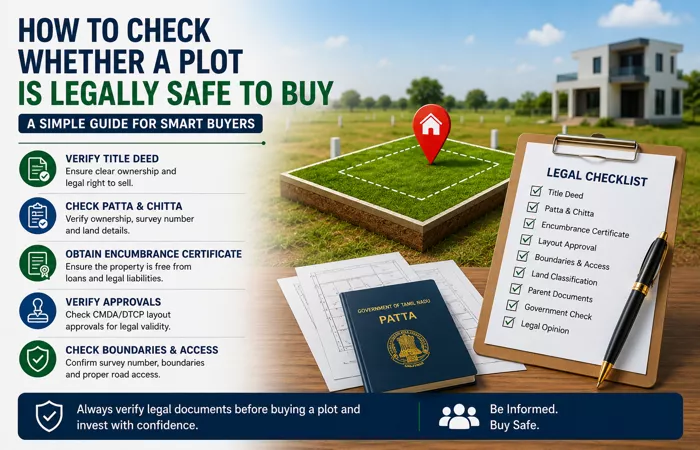
1. Verify the Title Deed
The Title Deed is one of the most important documents when purchasing land. It establishes ownership and confirms the seller's legal right to transfer the property.
Check for:
- Current owner's name
- Property description
- Survey number
- Chain of ownership
- Any legal disputes related to the property
A clear and marketable title is the foundation of a safe real estate investment.
2. Check Patta and Chitta Records
Patta and Chitta records help verify land ownership and classification.
Ensure that:
- The Patta is in the seller's name
- Survey numbers match the property documents
- Land classification is appropriate for residential use
- Property boundaries are accurately recorded
At Chennai Land, we recommend verifying these records through official government sources before proceeding with any purchase.
3. Obtain an Encumbrance Certificate (EC)
An Encumbrance Certificate helps determine whether the property has any financial or legal liabilities.
The EC reveals:
- Previous ownership transactions
- Existing loans or mortgages
- Court attachments
- Property transfers
A clean Encumbrance Certificate indicates that the property is free from registered financial obligations.
4. Verify Layout Approval
Before purchasing a plot, confirm that the layout has been approved by the relevant authorities.
Look for approvals from:
- CMDA (Chennai Metropolitan Development Authority)
- DTCP (Directorate of Town and Country Planning)
- Local planning authorities
Approved layouts provide greater legal security and improve future resale value.
5. Check Survey Number and Boundaries
Verify the survey number and compare it with:
- Patta records
- Sale Deed
- Layout plan
- Field Measurement Book (FMB) Sketch
Physical site measurements should match official records to avoid boundary disputes.
6. Confirm Road Access and Right of Way
Ensure the plot has proper road access and legal right of way.
Check:
- Road width
- Access routes
- Common pathway rights
- Layout road approvals
A plot without proper access may face development and resale challenges.
7. Verify Land Classification
Land classification determines how the property can be used.
Common classifications include:
- Residential Land
- Agricultural Land
- Natham Land
- Wet Land (Nanjai)
- Dry Land (Punjai)
Buyers planning to build a house should ensure the property is approved for residential purposes.
8. Review Parent Documents
Parent Documents establish ownership history and help verify whether the property has been legally transferred over time.
Review documents covering at least the previous 30 years whenever possible.
These records help identify:
- Ownership continuity
- Legal transfers
- Potential disputes
- Missing links in ownership
9. Check for Government Acquisition Notifications
Before purchasing, confirm that the property is not included in:
- Road expansion projects
- Infrastructure developments
- Government acquisition plans
- Public utility projects
This verification can prevent future ownership complications.
10. Seek Legal Opinion
Consulting a qualified property lawyer is one of the safest steps before purchasing land.
A legal expert can:
- Verify title documents
- Review approvals
- Identify hidden risks
- Confirm ownership authenticity
Professional legal review provides additional confidence before registration.
Common Warning Signs Buyers Should Avoid
Watch for these red flags:
- Missing ownership documents
- Unapproved layouts
- Patta mismatches
- Ongoing legal disputes
- Seller unwillingness to provide records
- Significant price differences from market value
If any of these issues arise, conduct further investigation before proceeding.
Why Choose Chennai Land?
At Chennai Land, we prioritize transparency, legal compliance, and customer confidence. Every property buyer deserves complete clarity regarding ownership records, approvals, and documentation.
Our commitment to helping customers find legally verified plots ensures a safer investment experience in Chennai's rapidly growing residential locations.
Conclusion
Checking whether a plot is legally safe to buy is a critical step in the property purchasing process. By verifying ownership records, approvals, Patta documents, Encumbrance Certificates, and legal status, buyers can avoid costly mistakes and invest with confidence.
At Chennai Land, we encourage every buyer to perform thorough legal verification before purchasing any plot. A secure investment begins with proper documentation, legal clarity, and informed decision-making.






Enquiry Form:-